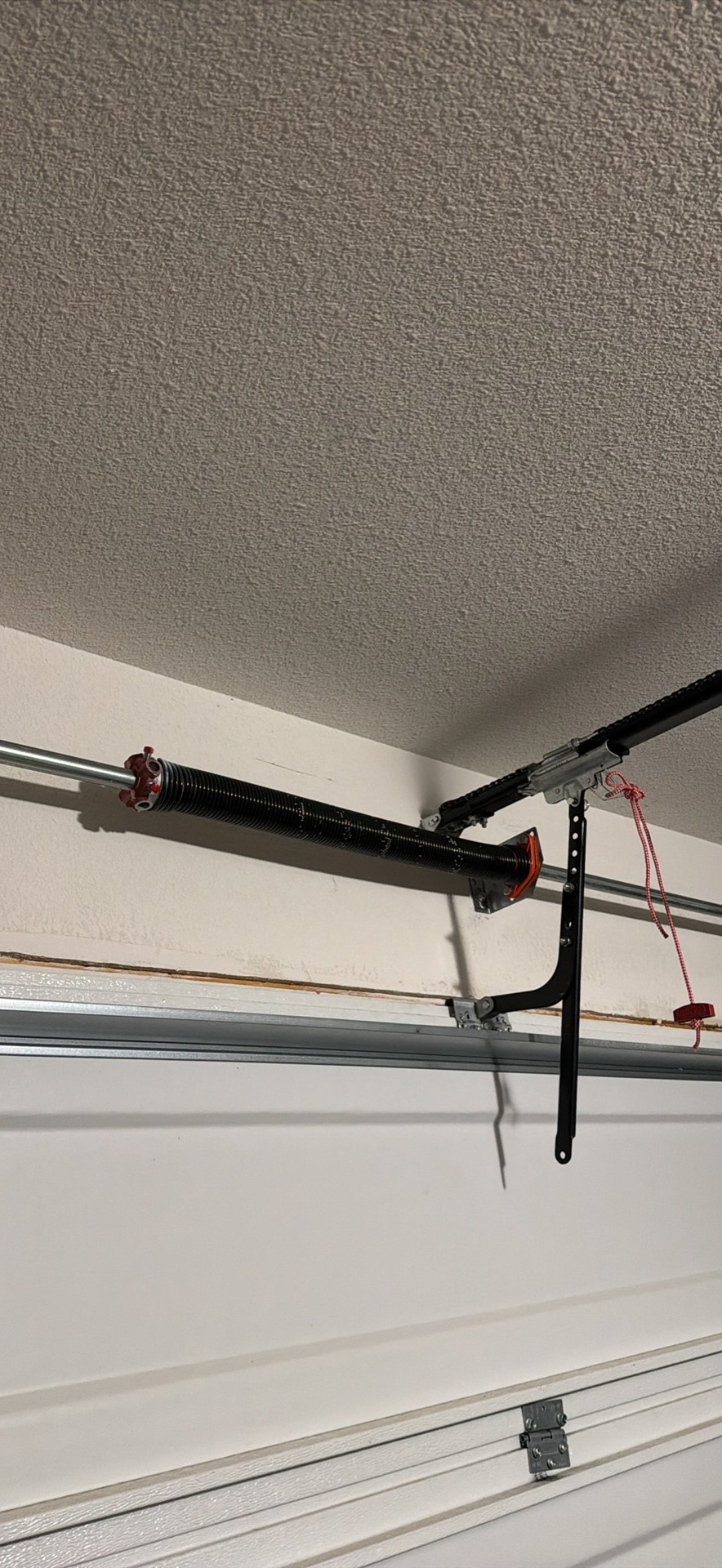
A broken garage door spring is the #1 reason homeowners call us for emergency service. The good news: it's usually quick to fix. The bad news: a broken spring is dangerous and should never be ignored.
The Warning Signs
Here's what to look for before the spring snaps completely:
- The door won't open at all — the opener runs but the door barely moves or stays shut.
- A loud bang from the garage — torsion springs snap with a sound like a gunshot. If you heard it, the spring is gone.
- The door looks crooked — one side is higher than the other when opening.
- Visible gap in the spring — look at the spring above the door. A 2-inch gap means it's broken.
- The door feels extremely heavy — springs counterbalance the door weight. Without them, it can weigh 200+ pounds.
Torsion vs Extension Springs
Most modern homes have torsion springs — a single bar mounted above the door. Older homes often have extension springs on the sides. Both can break, both are dangerous, and both need professional replacement.
Why You Shouldn't DIY This
Garage door springs are under extreme tension — enough to cause serious injury if they release suddenly. We've seen the aftermath. Please don't attempt this yourself. A professional replacement costs a fraction of an ER visit.
How Long Do Springs Last?
Standard springs are rated for about 10,000 cycles — roughly 7-10 years with daily use. High-cycle springs (which we recommend) last 2-3x longer.
What to Do Right Now
If you think your spring is broken:
- Stop using the door immediately.
- Don't try to force it open manually.
- Disconnect the automatic opener.
- Call us — we carry all spring sizes, and same-day appointments may be available.