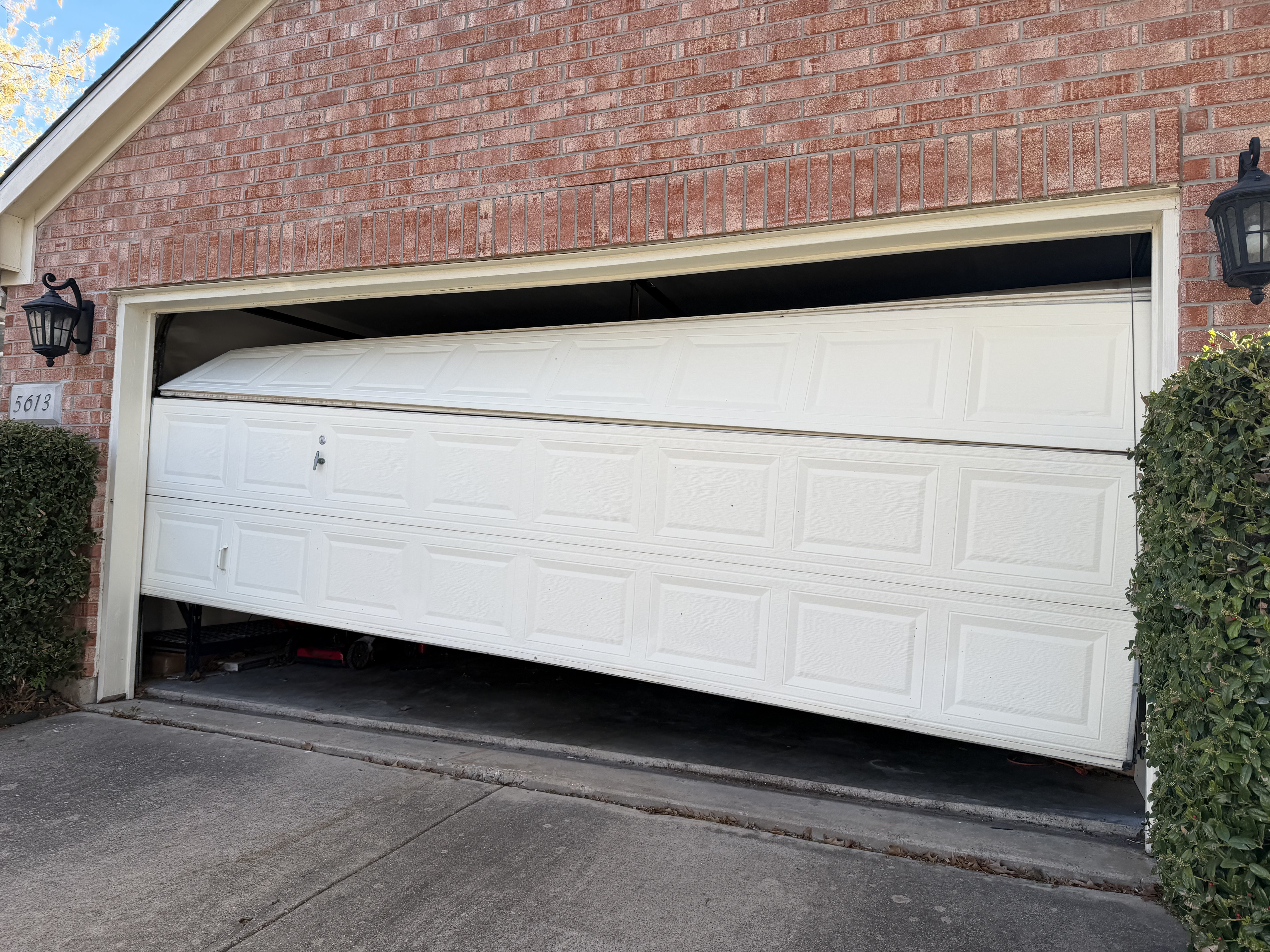
It's 7am on a cold Texas morning, you're already running late, and your garage door won't budge. Sound familiar? Cold weather affects garage doors more than most homeowners realize.
Why Cold Weather Causes Problems
1. Metal Contracts in the Cold
Springs, cables, and tracks are all metal. When temperatures drop, metal contracts — making components stiffer and harder to move. Springs that were already worn can snap completely in cold weather.
2. Lubrication Thickens
The grease on your rollers and hinges gets thick and sticky when cold. This creates friction that can slow or stop the door, and makes the opener work much harder.
3. The Door Seal Freezes to the Ground
The rubber seal at the bottom of your door can literally freeze to the concrete. Forcing the opener when this happens can snap the seal or damage the bottom panel.
4. The Opener Struggles
Cold weather thickens the lubricant in the opener motor too. If your opener is already aging, cold mornings can push it over the edge.
Quick Fixes You Can Try
- Lubricate the springs and rollers — use a silicone-based spray, not WD-40.
- Check the opener's force settings — some openers let you adjust travel force for winter.
- Break the seal gently — if the bottom is frozen, pour warm water along the seal and wait a minute before trying again.
- Let the garage warm up — even 10 minutes with the car running outside can help.
When to Call Us
If the door is still stuck after trying the above, or if you heard any snapping or grinding sounds, stop and call. Forcing a frozen door can cause expensive damage.